Guide
What exactly is Bazi?
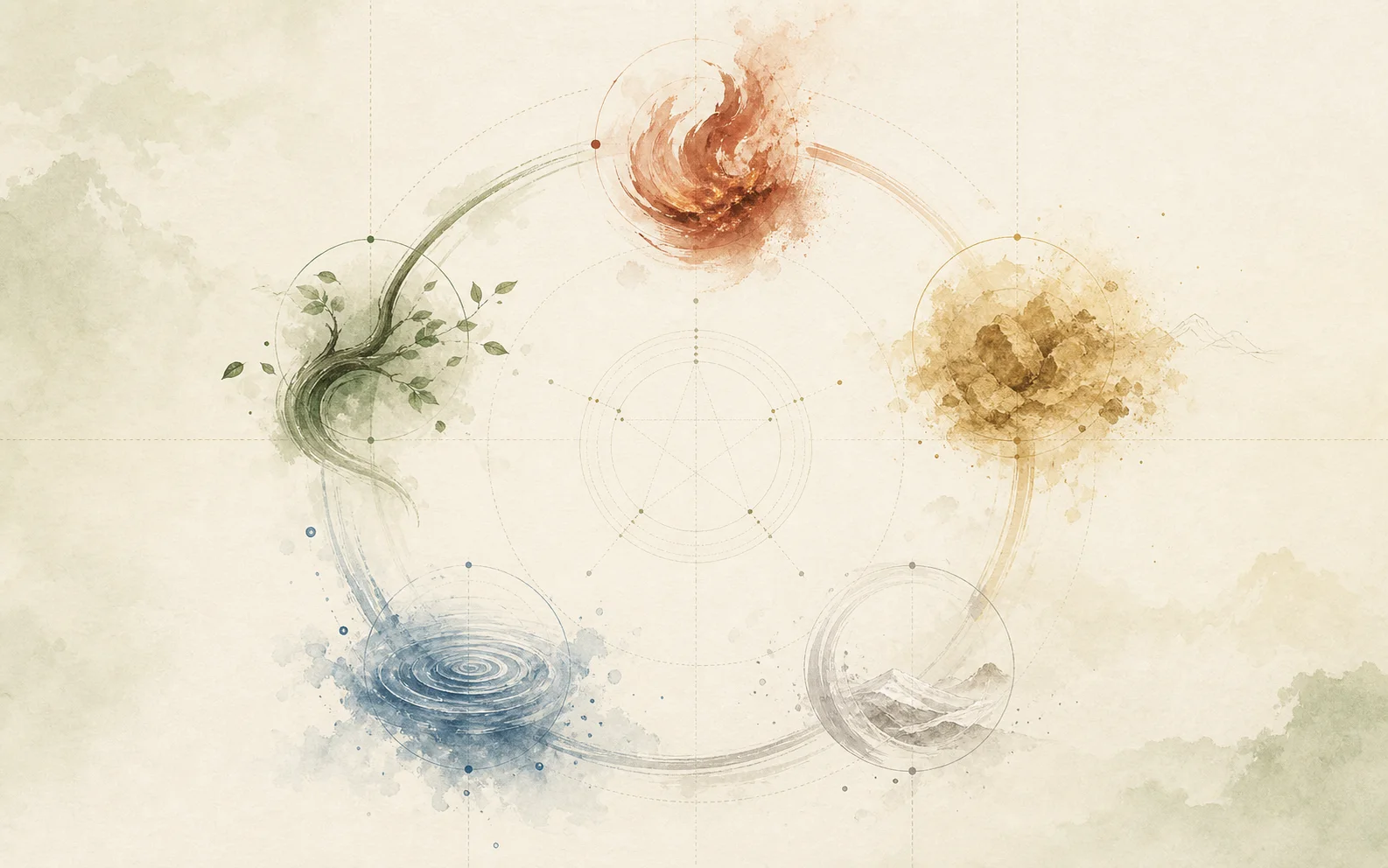
Bazi turns your birth year, month, day, and hour into four pairs of stems and branches. It reads a person’s energy structure and rhythm — not a fixed verdict on fate.
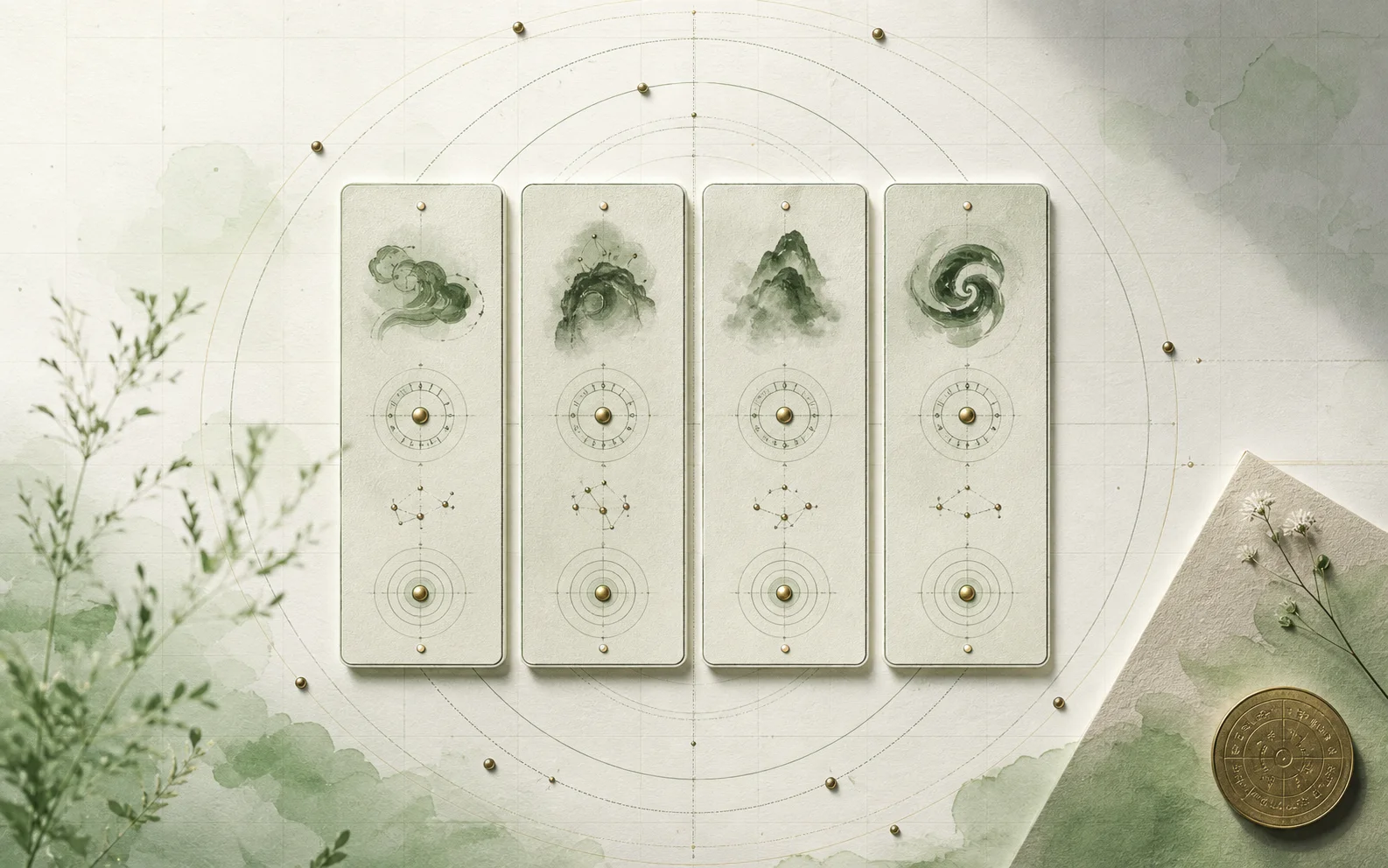
Bazi simply turns a person’s birth year, month, day, and hour into four pairs of heavenly stems and earthly branches — eight characters in total. It records the five-element environment at the moment of birth, used to read a person’s energy structure and rhythm, not to lock anyone’s fate.
Key takeaways
- 01Bazi = the birth year, month, day, and hour converted into four pillars of stems and branches, eight characters in all.
- 02It reads energy structure and tendencies, not a fixed verdict on your life.
- 03Strength and weakness are phases, not directly good or bad — judge them within the whole chart.
- 04Unlike zodiac signs, Bazi is calculated down to the birth hour, so it is far more fine-grained.
Bazi is four pillars, eight characters
Take the four time points of birth — year, month, day, and hour — and convert each into a pair of heavenly stem and earthly branch, and you get the four pillars. Each pillar has one stem and one branch, and the four together make exactly eight characters, which is why it is called Bazi, or the Four Pillars.
These eight characters are not assembled at random. They come from a fixed calendar conversion: with an accurate birth date and hour, you can lay out one and only one chart. In other words, Bazi translates the time information of the birth moment into the language of metal, wood, water, fire, and earth.
It reads structure, not the ending
When people first hear about Bazi, they often assume it is used to fix a whole lifetime in advance. A closer description is this: Bazi describes a person’s innate energy structure — which element runs strong, which runs weak, and how they generate and control one another.
Structure is the foundation, but environment and choice decide the direction. So Bazi is more like a topographic map: it tells you where the mountains and rivers are, but how you actually walk is still in your own hands.
Strong and weak are not directly good and bad
Beginners often treat a strong element as good and a weak one as bad, and that is where things go off track. Strength and weakness describe what phase a force is currently in — a little stronger, a little weaker — and you have to put it back into the whole chart to see whether it is useful and well-matched.
The classics warned about this long ago: a force that is too strong actually needs restraint, while one that is too weak needs support. The point of judgment is the overall flow and transformation, not the strength of a single character.
Classical source
《三命通会》论五行旺相休囚死
「凡推造化,见生旺者未必便作吉论,见休囚死绝未必便作凶言」
How it differs from zodiac signs and fortune-telling
Zodiac signs sort people into twelve types by birth month. Bazi is calculated from the birth year, month, day, and hour, down to the specific hour, so it is far more fine-grained: two people born in the same month but at different hours get different charts.
As for the common idea of fortune-telling, the difference is one of attitude. Daolyn fixes the calculation and rules first, then lets AI explain the structure and tendencies in plain language to help you understand yourself — not to make medical, legal, relationship, or financial decisions for you.
Frequently asked questions
- What exactly is Bazi?
- Bazi converts a person’s birth year, month, day, and hour each into a pair of heavenly stem and earthly branch, eight characters in total. It records the five-element environment at the moment of birth, used to read energy structure and tendencies, not to deliver a fixed verdict on your life.
- Is Bazi accurate?
- Bazi describes innate energy structure and tendencies — more like a topographic map than a written script. It can help you understand your own rhythm and leanings, but the actual direction still depends on your environment and your own choices.
- How is Bazi different from zodiac signs?
- Zodiac signs sort people into twelve types by birth month, which is fairly coarse. Bazi is calculated from the birth year, month, day, and hour, down to the exact hour, so two people born in the same month but at different hours have different Bazi charts.