Systems
Zi Wei, Mei Hua, and Liu Yao: what each system is good for
Different classical systems answer different kinds of questions. Zi Wei leans toward life domains, Mei Hua toward present situations, and Liu Yao toward concrete matters and timing.
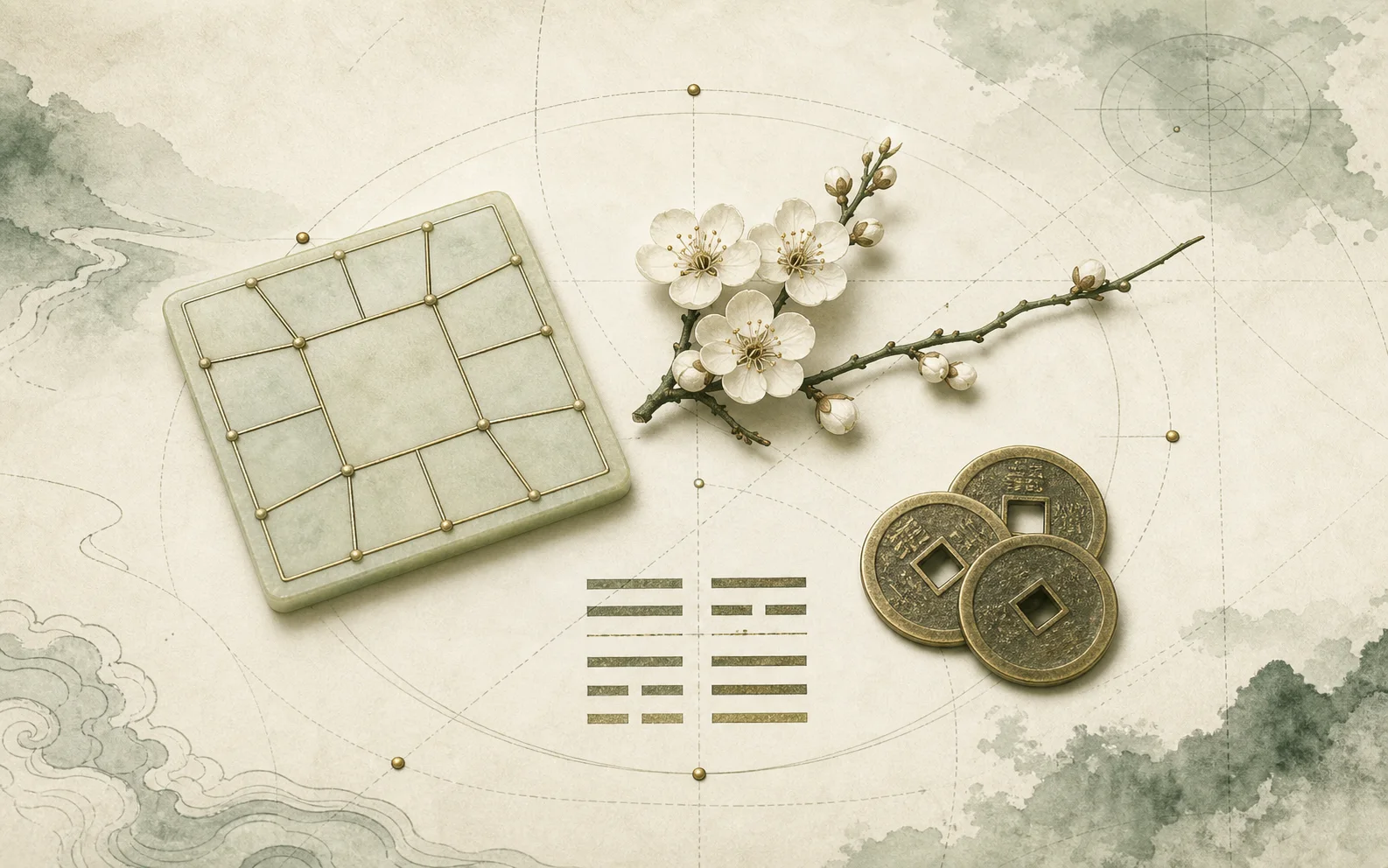
Different classical systems answer different kinds of questions. Zi Wei leans toward life domains, Mei Hua toward present situations, and Liu Yao toward concrete matters and timing.
Key takeaways
- 01Not every question belongs in the same system.
- 02Zi Wei, Mei Hua, and Liu Yao each have a better question style.
- 03Daolyn will keep the same standard for more systems: accurate structure first, explanation second.
Start by naming the question
One common source of confusion is treating every classical system as the same answer machine. Each system has a different angle and expects a different kind of question.
A long-term life-domain question and a near-term concrete question should not always use the same tool.
Where each system tends to fit
Zi Wei Dou Shu uses palaces and stars to read life domains such as work, relationships, family, and movement.
Mei Hua Yi Shu is often more situational and symbolic. Liu Yao is frequently used for concrete developments, gain and loss, and timing.
- Zi Wei Dou Shu: life domains and structure
- Mei Hua Yi Shu: present situation and images
- Liu Yao: concrete matters, development, and timing
One standard: calculate first, explain second
As more systems open in Daolyn, the sequence stays the same: calculate the structure accurately, then use AI to make that structure understandable and easy to question.
That is the difference from a generic chat model. The answer should stand on a structure you can inspect, not only on language that sounds like astrology.