Practical
OpenAI Engineer Jiayi Weng: I Believe in Determinism — Destiny Can Be Predicted
OpenAI core engineer Jiayi Weng publicly declared his belief in determinism, stating that humans have no free will and destiny can be predicted. His view remarkably aligns with the ancient Chinese art of BaZi — when cutting-edge AI scientists embrace predictable destiny, ancient wisdom deserves a fresh look.
OpenAI core engineer Jiayi Weng publicly declared his belief in determinism, stating that humans have no free will and destiny can be predicted. His view remarkably aligns with the ancient Chinese art of BaZi — when cutting-edge AI scientists embrace predictable destiny, ancient wisdom deserves a fresh look.
Key takeaways
- 01Recently, Jiayi Weng, a core engineer at OpenAI, made a striking public statement on social media: "I believe in determinism.
- 02Jiayi Weng is a core engineer at OpenAI who has contributed to several significant AI projects.
- 03Weng's perspective aligns remarkably with a tradition that has endured in China for thousands of years — BaZi (Eight Cha
- 04It's worth noting that neither Weng's determinism nor BaZi philosophy advocates passive resignation.
Overview
Recently, Jiayi Weng, a core engineer at OpenAI, made a striking public statement on social media: "I believe in determinism. Humans have no free will. Destiny can be predicted."
This declaration quickly sparked heated discussions across the tech and philosophy communities. Why would a researcher at the forefront of artificial intelligence arrive at such a seemingly counterintuitive conclusion?
Who Is Jiayi Weng?
Jiayi Weng is a core engineer at OpenAI who has contributed to several significant AI projects. As a researcher deeply involved with large language models (LLMs) and reinforcement learning, he works with "prediction" every day — the essence of training AI models is teaching machines to predict the most likely next token.
It is precisely this deep understanding of prediction that led him to reexamine humanity itself: If AI can learn patterns to predict language and behavior, could human destiny also follow identifiable and predictable patterns?
When an AI Scientist Meets Ancient Destiny Studies
Weng's perspective aligns remarkably with a tradition that has endured in China for thousands of years — BaZi (Eight Characters / Four Pillars of Destiny) .
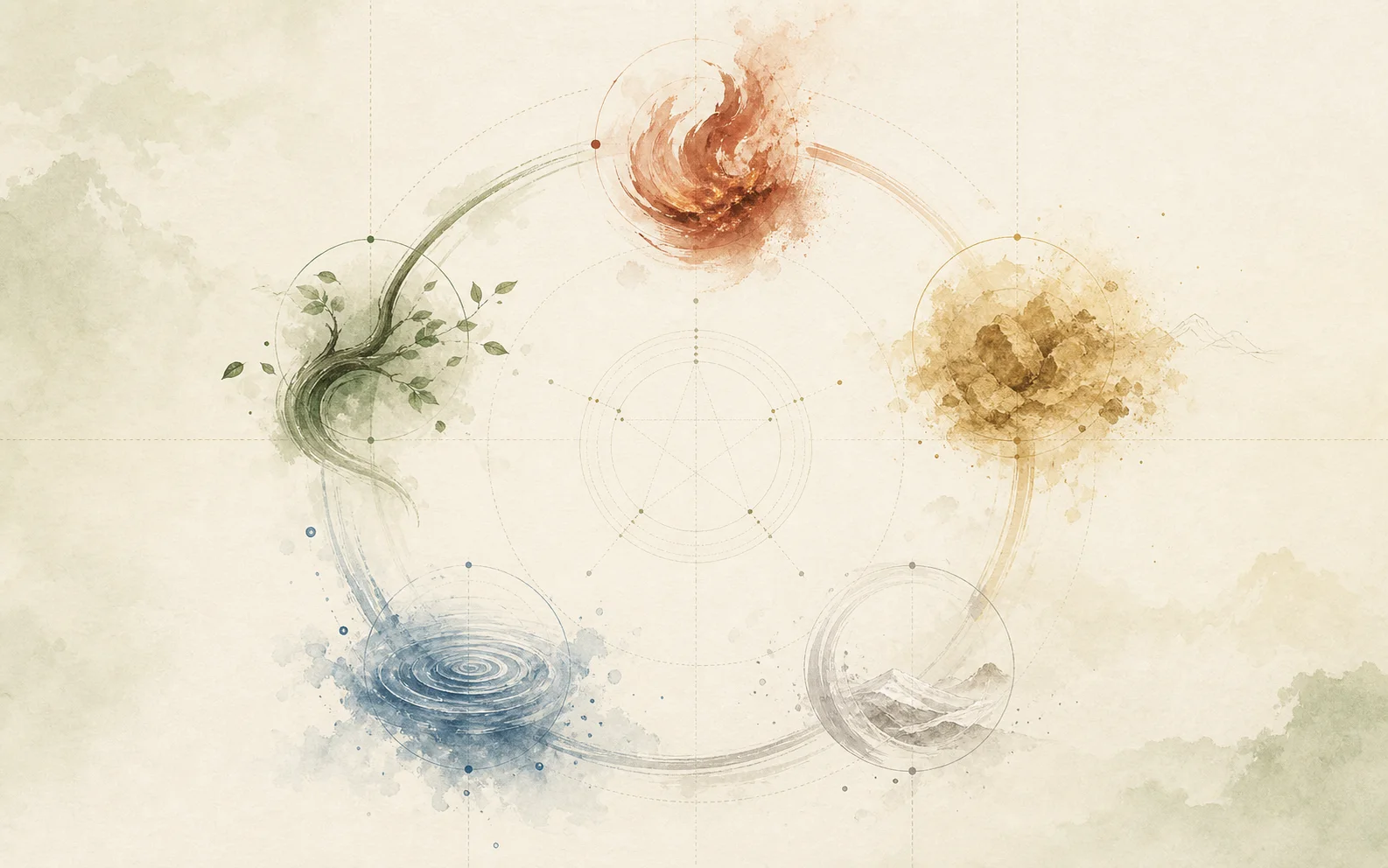
BaZi holds that the four pillars derived from one's birth year, month, day, and hour contain the code to one's life destiny. The interactions of the Five Elements through Heavenly Stems and Earthly Branches form a sophisticated system for destiny analysis. Ancient scholars discovered deep connections between temporal markers and life trajectories through centuries of observation.
The parallels with modern AI are striking:
- Pattern Recognition : AI learns patterns from massive datasets; BaZi distills patterns from millennia of observation
- Probabilistic Prediction : AI outputs the most likely outcomes; BaZi projects the most probable life directions
- Systems Thinking : AI relies on layered neural network reasoning; BaZi relies on systematic Five Element interactions
Determinism Doesn't Mean Passivity
It's worth noting that neither Weng's determinism nor BaZi philosophy advocates passive resignation.
The core wisdom of BaZi lies in this: Understanding your destiny patterns allows you to work with the flow rather than against it. Just as checking the weather forecast isn't about changing the weather but about planning your day better. Knowing your BaZi profile can help you:
- Understand your personality strengths and potential challenges
- Identify optimal timing for career development
- Optimize relationships and romantic life
- Make wiser decisions at critical junctures
Where Technology and Tradition Converge
Weng's perspective offers us a fresh lens: Perhaps ancient Eastern destiny studies and modern AI science are approaching the same truth from different directions — the universe operates according to inherent laws, and human destiny is part of that pattern.
When cutting-edge AI scientists begin to believe that destiny can be predicted, perhaps it's time to take a fresh look at the ancient wisdom we've long overlooked.
Discover Your Destiny Code
Curious about the life patterns hidden in your birth chart? Daolyn combines AI technology with traditional BaZi analysis to provide you with an in-depth destiny report.
Starting from your birth time, decode the blueprint of your destiny.